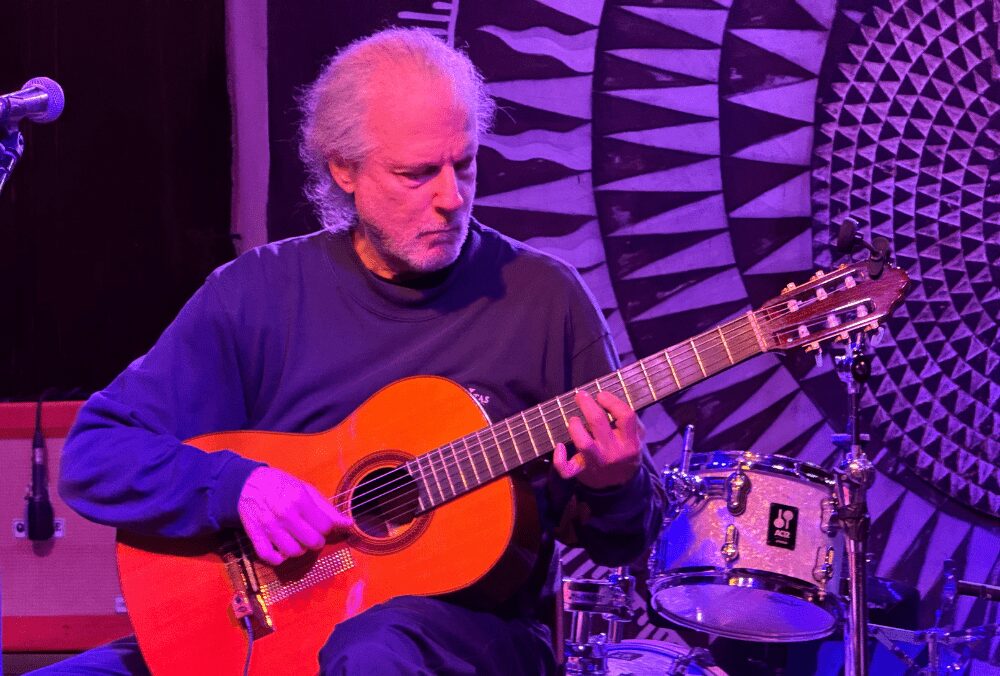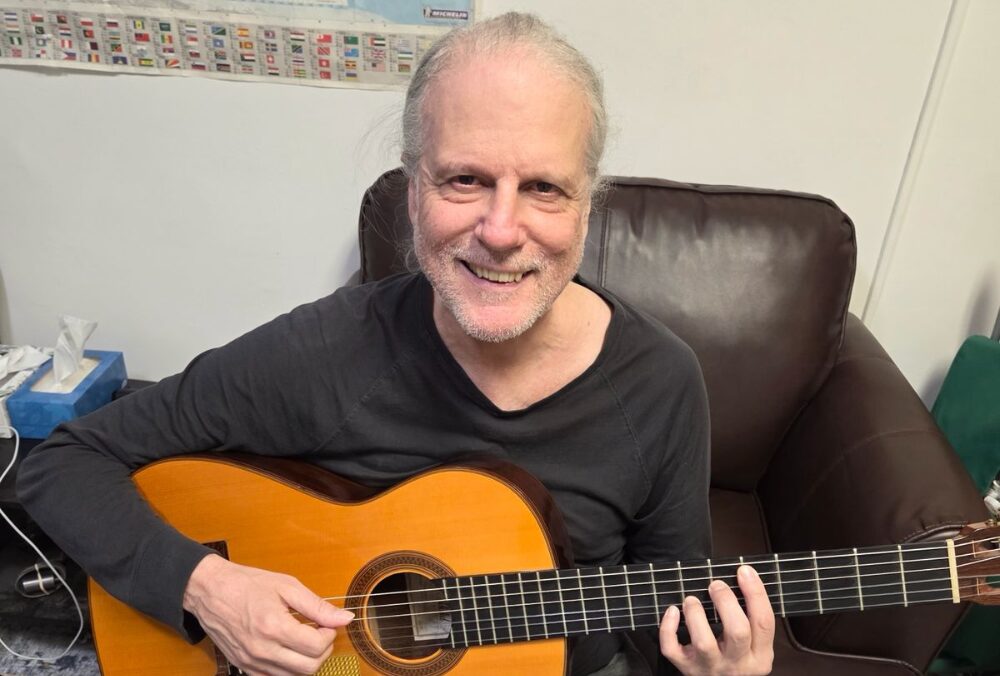
Sandy Ortega New Interview: The Spiritual Power of Spanish Guitar
Spanish guitarist Sandy Ortega treats every moment with his instrument as if the audience is already listening. For him, practice is not rehearsal; it is the performance itself. Guided by the spirit of the great Spanish masters while performing entirely his own compositions, Ortega blends discipline, spirituality, and emotional intensity into a deeply personal musical language. Ahead of an upcoming performance at Arts on Site in New York’s Village, Sandy Ortega opens up about audience energy, the quiet power of silence, and the enduring mystery of El Toque—the unmistakable Spanish touch.
Most musicians describe practice as working towards a performance. You’ve said practice is the performance. Does that mean every private session carries the same emotional weight as a packed room?
YES! Practice makes perfect. If you have perfect practices, which I do have, you really are performing. I SEE myself performing. I am at the level where every practice feels like a performance. Each one is very important to me.
Your music demands focused listening in an era engineered for distraction. When you sense an audience truly surrendering to the silence you create, what does that feel like from the stage?
My compositions and my whole repertoire are my own, so I have complete control of them. When I’m on stage, it feels like I have complete control. Even the silence feels intentional, and I can sense the audience’s anticipation building through that quiet moment.
You performed recently to a packed, cheering room. Given how interior and meditative your music is, does that kind of loud, enthusiastic crowd response validate the experience for you, or does it slightly contradict the intimacy you’re trying to create?
Man the audience got so loud at one point I could not hear myself playing! I love that, though—the cheers after each song really validate the experience. I enjoy it, but I’m also working on quieting the crowd. The quietest nuances need to be heard.
The collaboration with a Metropolitan Opera dancer is already pulling your compositions somewhere new. As you prepare to perform at Arts on Site in the Village, does that space require a different version of you, or does the guitar always make the room feel the same size?
When I was young, I played at Amateur Night at the Apollo Theater. When the curtains opened, the excitement was incredible. I was so excited. Now that I’m much older, though, the guitar makes the room feel the same size no matter where I perform.
Most musicians chase technical perfection. You’re chasing a feeling. Has chasing El Toque ever made you question whether it’s something that can actually be caught?
It can definitely be caught, but this is EL TOQUE THE SPANISH TOUCH, it is so exquisitely beautiful that nothing else matters. I definitely have the technique, so I don’t question it. It’s the Spanish sound that really makes me say, “Wow!”
When someone leaves one of your shows transformed in a way they can’t quite explain, what do you believe the Spanish guitar gave them that they didn’t know they needed?
That’s a great question. I’m thinking about it… In the Byzantine era and even earlier, Spain had a strong connection to the Orthodox Church—I am an Orthodox Christian myself. What the Spanish guitar can give people in a concert setting is a sense of spirituality. Through the guitar, they experience something deeper and more reflective. It brings a spiritual feeling to the performance, and that’s something everyone needs.
Your sound is rooted in the Romantic era but entirely your own. Is there a version of your future work that pushes even further from tradition, or does the root always stay the same?
The root must stay the same. These GREAT master composers for the Spanish guitar, like Joaquin Malats, are impossible to escape. My entire repertoire consists of my own compositions, but I am still deeply inspired by these truly great composers. I simply cannot leave them behind.
Independence has clearly shaped who you are as an artist. Is there anything the wider music industry could offer you that you actually want, or does the answer to that question keep changing?
The music industry may soon offer me larger venues, and they have a lot to offer. But I am an independent Spanish guitarist, and I will always play what I feel. Practice, practice, practice—that’s what gets you to Carnegie Hall.